
Jesus said, “Let your yes be yes and your no be no.” (Matthew 5:37)
Jesus’ words are simple, direct, and deeply challenging. At their heart, they call us to live with integrity, clarity, and faithfulness before God and one another. They remind us that our commitments matter—and that our limits do too.

One of the ongoing lessons of discipleship is learning that we cannot do everything. I struggle with this and maybe you do too. Even good things, when taken on without discernment, can crowd out the best things. A life filled with constant “yeses” can slowly lead to shallow commitments, weary souls, and burnout. Churches and their discipleship can become “a mile wide and an inch deep.” Sometimes the most faithful response is not adding one more responsibility but prayerfully saying “no” so that our “yes” can be wholehearted, honest, and true.
Jesus understood this rhythm of invitation and rest. In Matthew 11:28–30, He offers these well-known and beloved words: “Come to me, all you who are weary and burdened, and I will give you rest.” Notice that rest is not presented as an escape from calling, but as a gift from Christ Himself—rest that restores our souls so we can carry the yoke He gives, a yoke that is “easy” and a burden that is “light.” This kind of rest requires trust, humility, and intentional space to listen.
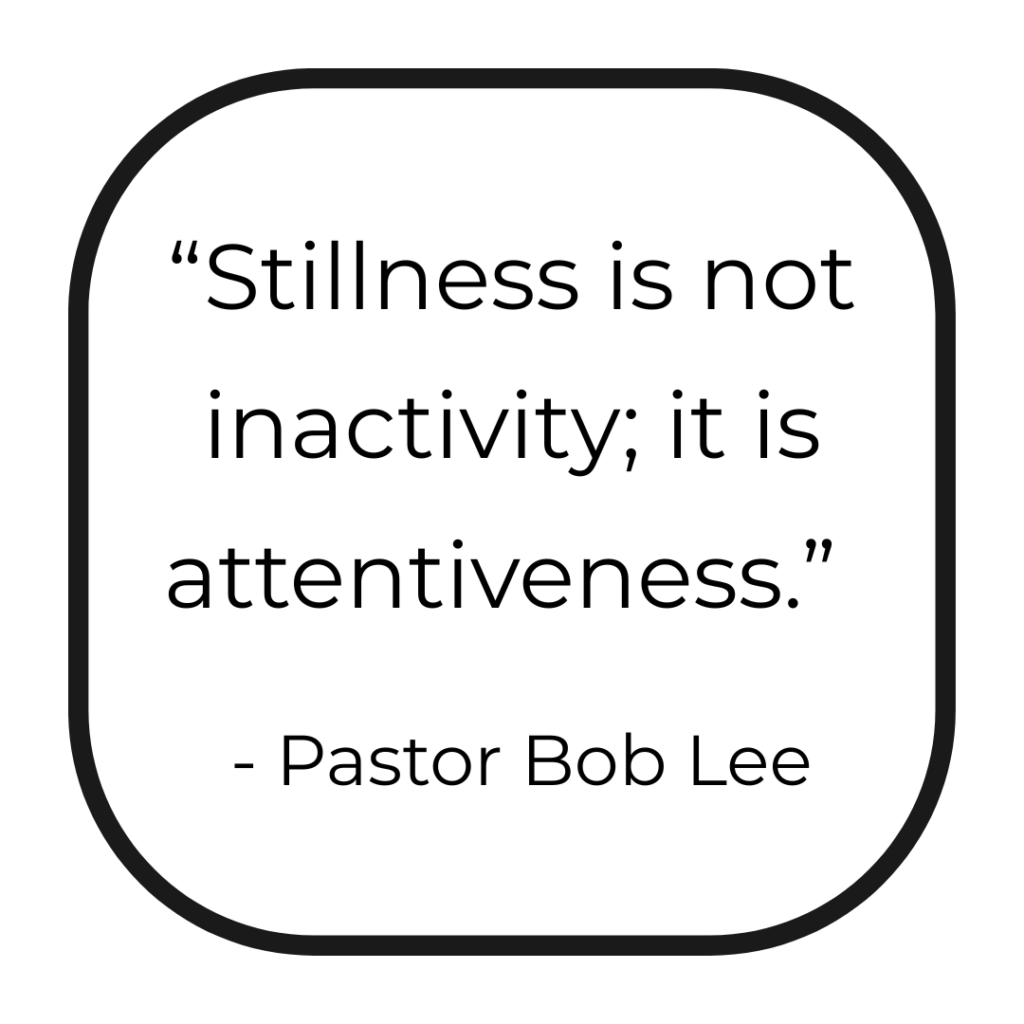
Scripture consistently affirms Jesus’ teaching. The psalmist records God’s invitation plainly: “Be still, and know that I am God.” (Psalm 46:10) Stillness is not inactivity; it is attentiveness. It is the posture that allows us to remember who God is—and who we are not. Likewise, Jesus reminds us in Mark 2:27, “The Sabbath was made for man, not man for the Sabbath.” Rest, reflection, and renewal are not burdens we carry to please God; they are gifts God gives so that we might live faithfully and fully.
Over the next couple of months, I will need to practice this kind of discernment in a very tangible way. I am working on an application for a Lilly Clergy Renewal Grant, with the hope of taking a sabbatical in 2027. (You might recall that I was supposed to take sabbatical in the summer of 2024 but it had to be cancelled.) This season of preparation requires focused time for prayer, reflection, listening, and planning—not only for my own spiritual health, but for the long-term well-being of our church.
The application process for the Lilly grant is extensive and the deadline for submission is March 18. As part of this process, I will need to step back temporarily from a few good and meaningful commitments so that I can give proper attention to the application. One of those short-term “no’s” will be my Friday YouTube devotional, which I plan to resume later this spring. Some other “no’s” will be to forgo most church meetings and delegation some of my responsibilities, like my weekly articles, to others. This is not a withdrawal from calling, but an intentional step toward long-term faithfulness and sustainability.
I share this with you not only to keep you informed, but to invite you into prayer. Please pray for wisdom, clarity, and attentiveness to God’s voice—for me, for our leadership, and for our church as a whole. And perhaps this season can also be a gentle invitation for each of us to reflect on our own rhythms of “yes” and “no.”
May we all have the courage to let our “yes” be fully given to what God is truly calling us to do, trusting Him with the “no’s” along the way—and resting in the gracious care of the One who says, “Come to me… and I will give you rest.”
0 Comments