
May is recognized nationally as Mental Health Awareness Month, and I am grateful for the intentional way our church is engaging in this important conversation. Pastor Sara Hubble prepared a Resource Guide which we distributed in our May 3rd bulletin. It is available on our website and posted on social media. I encourage you to take time to review it and share it with others—it is one small but meaningful step in how we care for one another.
For many years, the church has not always spoken openly about mental health. While we readily respond to visible needs—a broken bone or a physical illness—we have often struggled to know how to respond to emotional or psychological pain. Yet the reality is clear: many among us carry burdens that are not easily seen.
Consider just a few snapshots of the current mental health landscape in our nation. According to the National Alliance on Mental Illness (NAMI), 1 in 5 U.S. adults experience mental illness each year, and 1 in 20 experience serious mental illness. Among younger generations, the need is just as pressing, with 1 in 7 youth ages 6–17 experiencing a mental health disorder annually. Even more sobering, half of all lifetime mental illness begins by age 14, and suicide remains one of the leading causes of death among young people.
At the same time, there is a significant gap in care. Only about half of those experiencing mental illness receive treatment, and many wait years before seeking help. Millions of Americans live in areas where mental health professionals are in short supply. These realities remind us that this is not a distant issue—it is present in our families, our friendships, and our church.
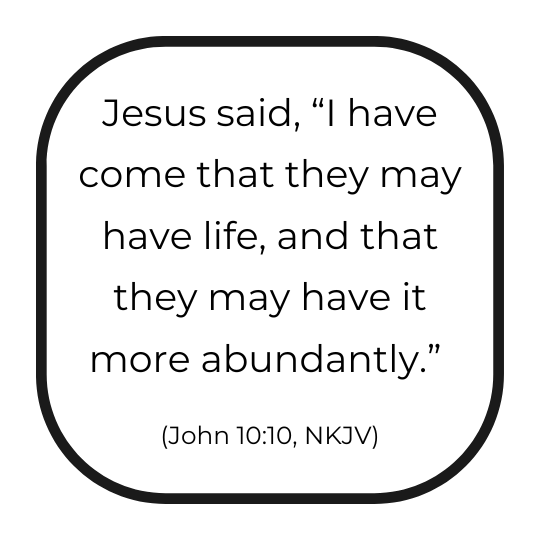
Scripture reminds us that Jesus came not only for the physically unwell, but for all who are in need of healing. His words in John 10:10 continue to guide us: “I have come that they may have life, and that they may have it more abundantly.”(NKJV) That promise speaks to the whole person—body, mind, and soul.
As a church, we are called to reflect that same holistic care.
What Does This Look Like for Us?
In October 2023, we had the privilege of hearing from Dr. Doug Thorpe, Executive Director of the Virginia Institute of Pastoral Care. He offered four practical and deeply biblical ways the church can respond to mental health needs. His insights provide a helpful framework for us:
1. Be a Companion: We are called to walk alongside one another. Often, the most meaningful support we can offer is simply our presence. Being a steady, compassionate companion reflects the heart of Christ, who never leaves us alone.
2. Normalize the Struggle: There is great freedom in acknowledging that it is okay to not be okay. When we create space for honesty, we begin to dismantle stigma. The church should be the safest place to speak truthfully about our struggles without fear of judgment.
3. Build a Culture of Support: Support does not happen accidentally—it requires intentionality. We are called to create environments where people are encouraged, strengthened, and loved, even in the midst of differences. This goes beyond tolerance; it is the kind of Christ-centered love that binds us together.
4. Promote Mental Health: Caring for people means caring for the whole person. This includes providing opportunities for individuals to share their experiences, seek help, and grow in emotional and spiritual health. When we do this well, we reflect the compassionate ministry of Jesus.
A Simple Way Forward
So, what can we do—practically and personally? Start small, but start intentionally:
- Notice people. A simple “How are you doing—really?” can open the door.
- Be present. Often, the greatest gift you can offer is your presence.
- Speak hope. Offer encouragement that reflects the love and grace of Christ.
- Stay connected. Make participation in worship and small group community a priority—not just for your own growth, but so you can be part of someone else’s support system.
These may seem like small steps, but they are powerful when lived out consistently.
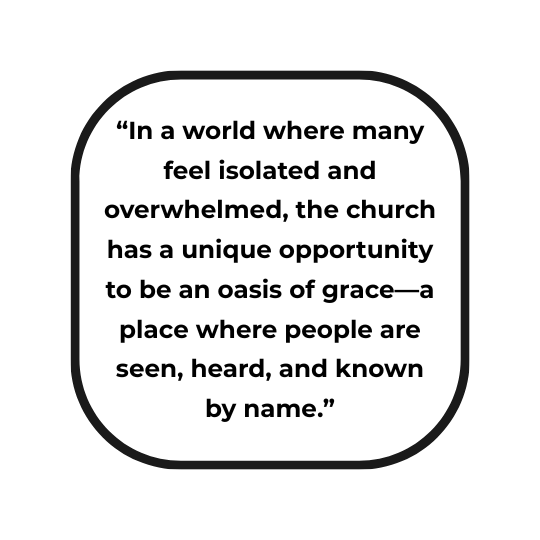
In a world where many feel isolated and overwhelmed, the church has a unique opportunity to be an oasis of grace—a place where people are seen, heard, and known by name.
This reflects the heart of the Good Shepherd, who knows His sheep and calls them each by name. And it is the calling we share as His people.
May we be a community that offers hope, extends grace, and walks alongside one another toward the abundant life Christ has promised.
In His peace,
0 Comments