
In college at Winthrop, I was a Political Science major and aspired to attend law school and, someday, enter politics. God, of course, had other plans. When I was not accepted into law school, I went to work as a claims adjuster for South Carolina Farm Bureau Insurance.
I remember visiting with the attorney who handled our defense work and sharing the news that I was heading to seminary to become a pastor. He smiled and said, “You’re going to be practicing a higher kind of law—ten of them.” He was referring to the Ten Commandments, and, as a fellow Baptist, he was both supportive and encouraging as I followed God’s call.
I have always had a deep appreciation for freedom—the freedom of the mind, the will, expression, and religion. During college, I was involved in the South Carolina Student Legislature (SCSL). Colleges and universities from across the state each sent delegations. When the State Legislature was out of session, we conducted a mock government—submitting legislation through committees, debating on the floor of both houses, and even electing a governor. At the end of the session, we compiled a book of legislation and submitted it to the governor’s office, hoping our ideas might be considered.
While in SCSL, we had a phrase that captured our core values: “Our Freedom, Our Liberty, Our Responsibility.” I proudly displayed that bumper sticker on my car. Even now, more than four decades later, those words have stayed with me. As a Christian—and as a Baptist pastor—I still hold them close. Perhaps it is “bumper-sticker theology,” but in this case, it carries real depth and meaning.
As a Virginia Baptist, I have long stood on this foundation of freedom, liberty, and responsibility. Over the years, I have made it a priority to help newcomers understand the historic principles that shape us as free and faithful Baptists. One particularly helpful resource has been The Baptist Identity: Four Fragile Freedoms by Walter B. Shurden.
Shurden highlights four essential freedoms that have long defined Baptist life: Bible Freedom, Soul Freedom, Church Freedom, and Religious Freedom. Recently, I had the opportunity to share these at the Bon Air Interfaith Trialogue—a gathering of our Abrahamic neighbors, including Protestant and Catholic congregations, the Islamic Center of Virginia, and Congregation Or Ami.
This year’s theme was Religious Freedom, with a focus on the Virginia Statute for Religious Freedom. It was surprising to discover that many participants across all three faith traditions were unfamiliar with the statute, authored by Thomas Jefferson with the assistance of James Madison. Our discussions centered on how well we are living into its vision today, how each faith community is impacted by it, and how we might better highlight and celebrate it in our communities.
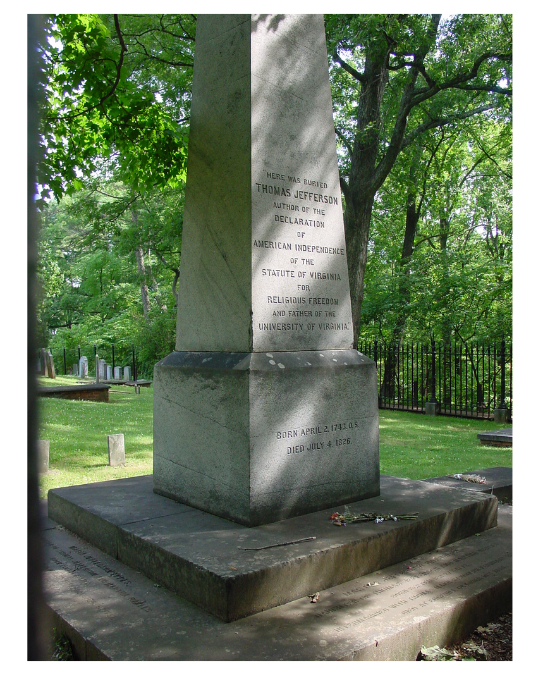
I would encourage you to read the statute, passed by the Virginia General Assembly on January 16, 1786. This past January marked its 240th anniversary. If you have visited Monticello, you may recall Jefferson’s epitaph: “Author of the Declaration of American Independence, of the Statute of Virginia for Religious Freedom, and Father of the University of Virginia.” Notably, he chose to highlight religious freedom among his greatest contributions—even above his presidency.
During the month of July, as our nation approaches its 250th year, I will be preaching a four-part series titled We Hold These Truths. Together, we will explore these four freedoms as outlined by Dr. Shurden:
Part 1: “A Freedom Worth Protecting” | Acts 5:27–29
Religious Freedom is not just ours—it is for all. As Baptists, we are called to be both grateful and vigilant, defending this freedom with humility, not hostility.
Bible Freedom affirms that every believer has both the right and the responsibility to read, interpret, and respond to Scripture under the lordship of Christ.
Part 2: “A Faith That Must Be Chosen” | Joshua 24:14–15
Soul Freedom reminds us that each person is accountable to God and must respond freely. Faith cannot be coerced or inherited.
Part 3: “A Bible in Every Hand” | 2 Timothy 3:14–17
Part 4: “A Church Under One Head” | Colossians 1:15–18
Church Freedom proclaims that the local church answers ultimately to Christ alone—not to external authorities, traditions, or cultural pressures.
As we hold religious freedom close to heart, Dr. Shurden reminds us that Thomas Jefferson “had the spiritual vision to see that liberty is the fountainhead of civilization and that religious liberty is the mother of all other forms of liberty.”
And ultimately, Jesus said it best: “Then you will know the truth, and the truth will set you free.” (John 8:32)
God’s blessings,
0 Comments