
Have you ever stopped to consider what is shaping your thinking each day? The sources of our news and media are more numerous—and more influential—than ever before. What once came from a handful of trusted outlets now flows endlessly through social media, podcasts, and algorithm-driven feeds. If we are not careful, we can quickly find ourselves immersed in a stream of content that subtly shapes how we see the world—and one another.
In today’s divisive political climate and uncertain global landscape, I have been thinking more about my media intake. I’ve become more aware not only of the sources I rely on, but also the timing and amount of media I consume. For example, it is especially important to avoid screens before bed. Some call this a “digital sunset”—turning off devices an hour before bedtime to allow the mind to rest. The same is true in the morning. Rather than beginning the day with a screen, I want to begin by listening for the voice of God through silence, Scripture, and prayer.
But how do we vet and better screen the sources of our media? All media naturally has some bias. But what is its stance or political bias? Is it center, left or right? Is it extreme? Is it reliable or not? Does it contain original fact with high effort or is it misleading, inaccurate or fabricated? Does it help me know the truth and to make informed decisions and statements?
Resources: To help us do our own homework and understand the lay of the land, I’ve curated a few resources:
1) Ad Fontes Media: Ad Fontes is Latin for “to the source.” It is a “public benefit corporation based in Colorado. Being a public benefit corporation means [it] is a for-profit business with a stated public mission, which is to rate all the news to positively transform society.”
Ad Fontes has a “Media Bias Chart” that rates media from the “most extreme left to the most extreme right” as well as original fact, high reporting to that which contains inaccurate / fabricated information.
The chart provides a “green box” that includes media sources with their news value and reliability, balance, and how that source skews, whether to the left, center or right.
The following examples are within the Ad Fontes green box:
- Wall Street Journal, Christianity Today and The Air Force Times fall in the “Middle” in bias and as “Reliable, Analysis/Fact Reporting” in terms of reliability. Each skews slightly to the “Right” of center.
- The Fox News: Special Report w/ Bret Baier skews “Right” in bias and is “Reliable, Analysis/Fact Reporting” in its reliability.
- Barrons and NPR News Now Podcast are “Middle” in bias and “Reliable, Analysis/Fact Reporting” in its reliability and are almost “Dead Center.”
- Reuters, BBC, and AP fall in the “Middle” in bias and as “Reliable, Analysis/Fact Reporting” in terms of reliability. Each skews slightly to the “Left” of center.
- CNN: The Situation Room skews “Left” in bias and is “Reliable, Analysis/Fact Reporting” in its reliability.
2) All Sides Media: AllSides’ information integrity technologies and services help people and organizations get out of manipulative, one-sided, and biased information systems wherever they might be—in technology, news, companies, government, classrooms and beyond—so we can all see the full picture, think for ourselves, and make the best decisions. For Media Chart → All Sides Media Chart.
3) James Madison University: Of course, with a graduating senior at JMU (Go Dukes!) I thought I’d share its Media Literacy Page. JMU Libraries has curated this list of resources that help their community to “Be aware of: bias, political propaganda, intentional disinformation, satire, attention-seeking click-bait, conspiracy theories, and sloppy reporting . . . and ask . . . “Who wrote it? Who benefits? Who is left out?”
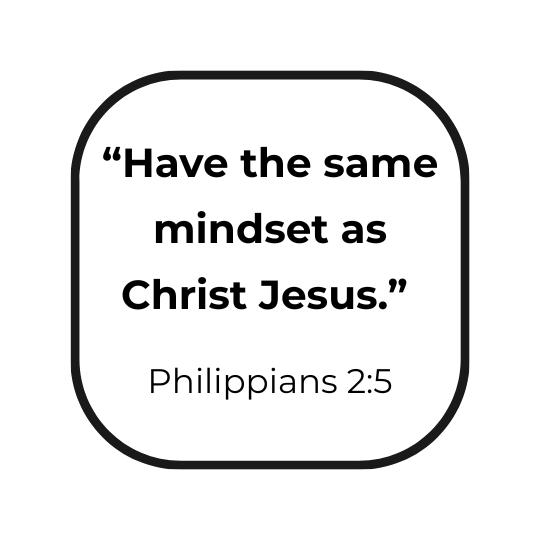
Our Mission: At the end of the day, our ultimate filter is not political, technological, or cultural—it is spiritual. We are followers of Jesus who are in the world “but not of the world.” (John 17:16) We are called to “love God and to love our neighbor as ourselves.” (Mark 12:30-31) Paul writes that we are “citizens of heaven” (Phil. 3:20) and that we are to “have the mind of Christ.” (Phil. 2:5) Our mindset compels us to filter our media and culture through the lenses of Jesus Christ, asking what did Jesus do and what would Jesus have me to do?
Can you imagine what our homes, our church, and our community would look like if we truly lived this way? This is our purpose and mission. May we be relentless as we go!
In His peace,
0 Comments