
One of the quieter secrets of sustained, faithful leadership is not more answers — it is better questions. In a recent podcast interview, Pastor Rick Warren reminded Carey Nieuwhof (and all of us listening) that the quality of our life and leadership will be determined by the quality of the questions we ask ourselves and others. That insight is simple and profound: people who keep learning, growing, and leading well are people who never stop asking.
Pastor Rick offered a memorable and practical tool: the acrostic S-P-E-A-K. It’s not cleverness for its own sake; it’s a pattern anyone can use at a banquet, a coffee shop, a hospital bedside, or a church hallway.
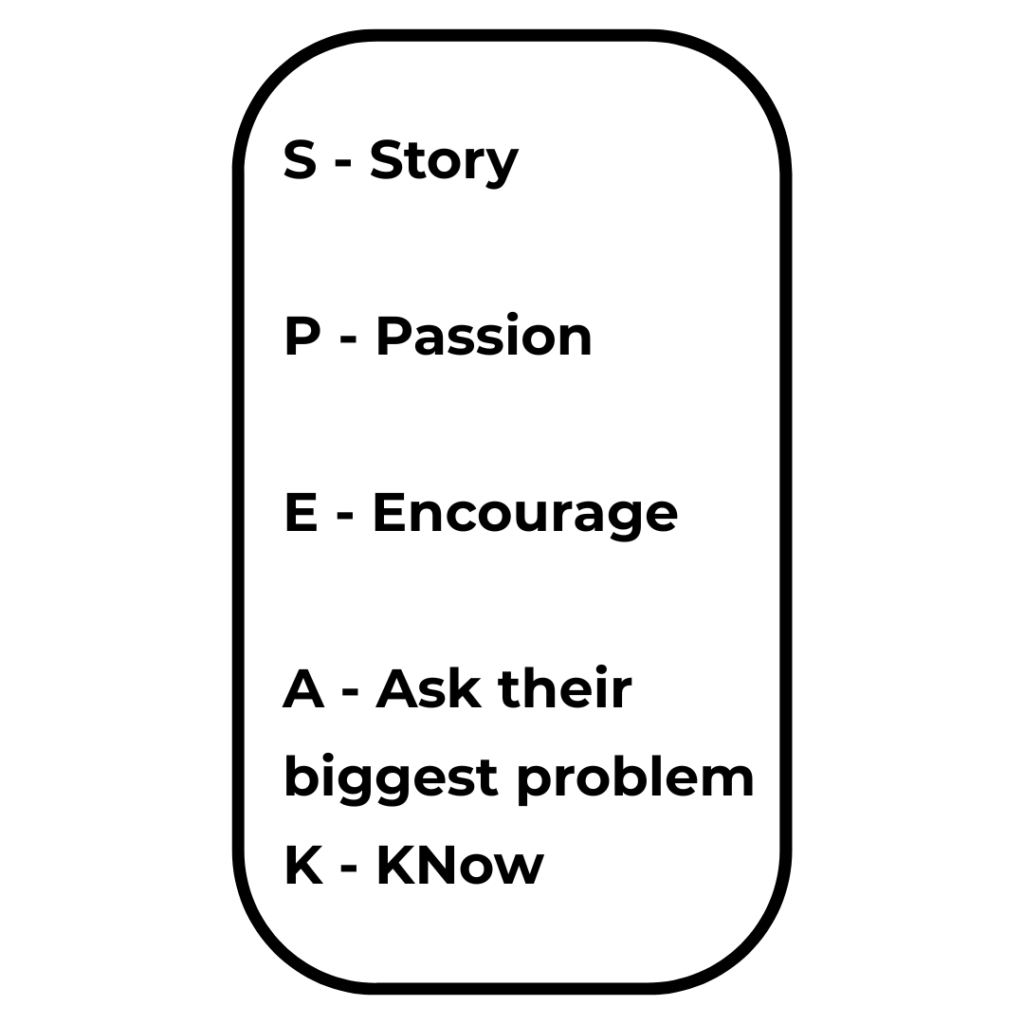
- S — Story. “Tell me your story.” People long to be heard. Asking for someone’s story invites them to be known and helps you discover where they’ve been and what shaped them.
- P — Passion. “What gets you up in the morning?” When we learn what lights another’s soul on fire, we learn how God has wired them and how we might encourage them to serve.
- E — Encourage. A timely, honest word of permission or affirmation can liberate someone to take the next step God is calling them to.
- A — Ask their biggest problem. “What keeps you up at night?” That question moves conversations from polite to pastoral; it lets us bring practical help or prayer.
- K — Know. “Who do you know that I need to know? What do you know that I need to know?” This last question serves the asker — it expands your network of care and your understanding of God’s work around you.
Rick’s encouragement to “have a list of questions tucked in your wallet” is more than a neat tip. It’s a spiritual habit builder. When we prepare good questions ahead of time, we become ready to connect, to learn, and to serve — even in the briefest encounters.
This isn’t just a church leadership principle. Prominent innovators and business thinkers have seen the same truth. MIT innovator Robert Langer once observed, “When you’re a student, you’re judged by how well you answer questions, but in life, you’re judged by how good your questions are.” Peter Drucker, the father of modern management, warned decades ago that our most important task is not finding the right answers but finding the right questions, noting, “There are few things as useless, if not dangerous, as the right answer to the wrong question.” Leaders aren’t defined by having all the answers, but by cultivating the right questions.

And curiosity doesn’t have to stop at the big questions of leadership or faith. Sometimes the best practice is to wonder about the everyday. I have a book on my shelf titled What Einstein Told His Barber by Robert Wolke. He tackles questions like, “Why is one side of aluminum foil shinier than the other?” “Why do we smell rain before it rains?” and “How do huge airplanes fly?” These may seem small, but they remind us that curiosity is a habit of mind. The more we practice asking, the better we get at listening, learning, and discovering truth in all areas of life.
Practically, how might this look for us as a congregation?
1. Make a small list. Put three to five questions on an index card or the Notes app on your phone. Carry them. Pull them out. Use them.
2. Practice asking — and then listening. When someone speaks, listen fully; ask one follow-up question rather than planning your next line.
3. Ask the hard questions of yourself. What is it like to be on the other side of me? What assumptions have I made? What do I need to learn? Self-questioning keeps pride in check and curiosity alive.
4. Train others. Teach parents, small-group leaders, and youth workers to ask these kinds of questions. A congregation that asks is a congregation that disciples.
5. Pray with questions. Bring your questions into prayer: “Lord, what do you want to show me in this?” or “Who do you want me to speak into this week?” God often answers by opening our eyes to persons and possibilities.
Scripture provides some framework: James instructs those who want to grow in wisdom to ask God — and to expect that God gives generously (James 1:5). Jesus Himself often led with questions rather than answers.
Asking questions is not a weakness; it is a mark of maturity. It signals that we are teachable, that we value others, and that we trust God to keep shaping us. Leaders who stop asking begin to fossilize; leaders who keep asking remain alive.
This week I invite you to make a short list of questions — S-P-E-A-K or whatever helps you. Try it out with a friend, family member or in a moment alone with God. See what the Spirit reveals. I’d love to hear from you!
Grace and peace,
0 Comments