
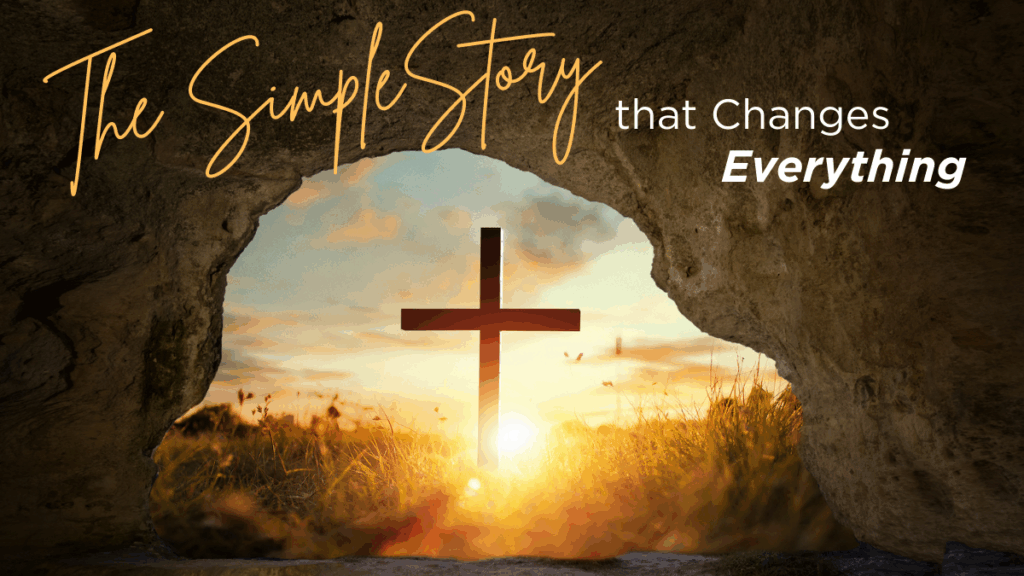
As we journey through Holy Week, the most sacred week of the Christian calendar, our hearts turn toward the joy and mystery of Easter. At its heart, Easter tells a simple yet world-changing story: Jesus Christ, crucified and buried, is risen. This Easter, the sermon is entitled, “The Story That Changes Everything” from Luke 24:1–12. For Christians, the empty tomb is not just the end of a chapter, but the beginning of new life — hope breaking through death, light shattering darkness. It’s the simple story that changes everything.
Yet in our culture today, Easter can often seem more associated with pastel eggs, chocolate bunnies, jelly beans and spring sales than with the resurrection of our Savior. This Holy Week, as many around us are searching, skeptical, or simply curious, we have a beautiful opportunity to gently and joyfully share the true meaning of Easter. This gives reason for my hope that we will invite others to join us for worship this Easter, April 20th, at 10:30 in the sanctuary.
A Little Background on Easter:
The English word Easter has an interesting and debated history. It’s believed to be derived from Eosturmonath (or Ēosturmōnaþ), the Old English name for the month of April. According to the Venerable Bede, an eighth-century English monk and historian, this month was named for a springtime fertility goddess called Eostre, who was honored with seasonal festivals. As Christianity spread throughout the British Isles, early Christians began celebrating the resurrection of Jesus during this same time of year, and the Church redefined the name and timing with Christ-centered meaning.
While this naming convention remained in English and Germanic languages, most other cultures refer to Easter as Pascha, drawn from the Hebrew Pesach — Passover. This biblical connection highlights that Easter is not just a spring celebration but the fulfillment of God’s redemptive plan. Jesus, our Passover Lamb, brings liberation not just from slavery in Egypt, but from sin and death itself (see 1 Cor. 5:7).
What About the Eggs and the Bunny?
Easter eggs and the bunny also have pre-Christian origins as springtime symbols of new life and fertility. The egg, with its shell that breaks open to reveal life, became a natural Christian symbol for the resurrection. Over the centuries, eggs were incorporated into Christian traditions, especially after Lent, when eating dairy, meat and eggs was often forbidden. Christians would hard boil eggs so they would last longer and not go to waste. As time went on, they would decorate the eggs with Christian symbols and pastel colors of spring.
The Easter Bunny, with roots in German folklore, likely stems from the “Osterhase,” a hare that would lay colorful eggs for children. German immigrants brought this tradition to America in the 1700s. While delightful, these customs remain seasonal symbols that, at their best, can point to deeper truths about life, renewal, and hope.
Sharing the True Meaning of Easter:
So how do we bridge the gap between cultural Easter and biblical Easter, especially with someone who might be searching, cynical, or just curious?
- Start with the story. Luke 24, which includes Sunday’s sermon text, is filled with real human emotion — grief, confusion, wonder, disbelief, and ultimately joy. Invite people into that story. You don’t need to explain everything up front; sometimes the story speaks for itself.
- Be relational, not confrontational. Easter isn’t about winning arguments; it’s about sharing a Person (Jesus). Share how Jesus’ resurrection has brought you hope, peace, or purpose. Personal stories are powerful!
- Use the familiar to point to the eternal. Whether it’s a family meal or an Easter egg hunt, moments like these can open the door to meaningful conversations. Ask questions like, “Did you ever hear the Easter story growing up?” or “What does Easter mean to you?”
- Extend an invitation. Sometimes the most powerful thing we can do is simply invite someone to worship, to community, or to hear the story for themselves. Easter Sunday might just be their new beginning. After all, how many Christians accepted Jesus because someone argued them to the faith? Most will say that someone extended an invitation or that it was the way a Christian lived her or his life.
This Sunday, as we proclaim “He is risen!”, may we do so with confidence and compassion. Easter reminds us that no matter how dark or uncertain life may seem, the tomb is empty . . . Jesus is alive . . . and that changes everything!
With Resurrection Hope,
0 Comments